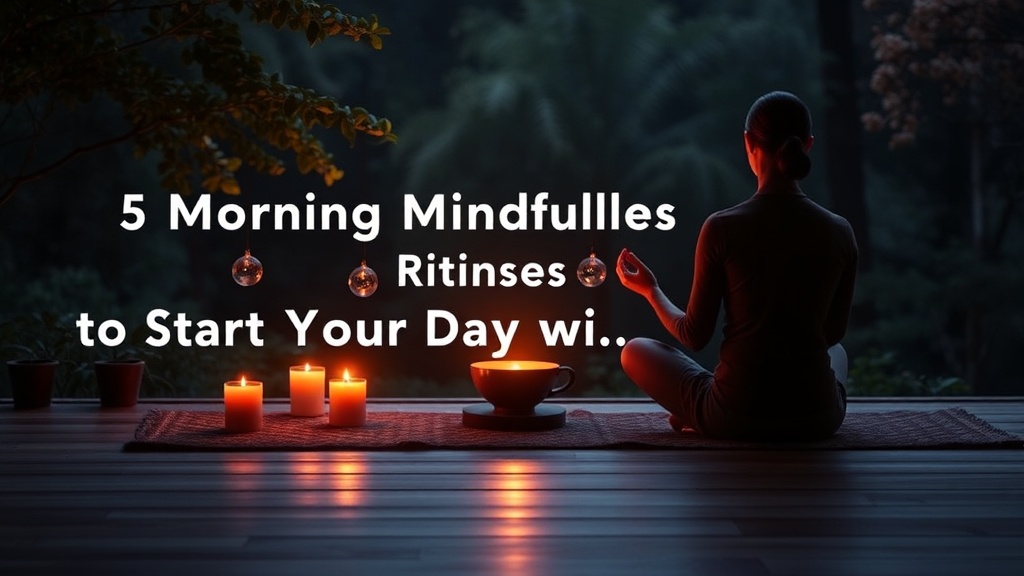
5 Morning Mindfulness Rituals to Start Your Day with Intention

Conscious Breathing: The Five-Minute Anchor
Gentle Movement: Awakening the Body Mindfully
Gratitude Journaling: Setting a Positive Tone
Digital Delay: Resisting the Screen Urge
Mindful Sipping: Turning Coffee or Tea into Meditation
Morning routines set the tone for everything that follows. The first hour after waking is a window of opportunity where the mind is still pliable, receptive, and hungry for direction. This post covers five specific mindfulness rituals that transform chaotic mornings into intentional beginnings. You'll learn practical techniques backed by research that don't require waking at 4 AM or sitting in silence for an hour. These rituals work for busy professionals, parents, and anyone who wants to stop reacting to the day and start directing it.
What Is Morning Mindfulness and Why Does It Matter?
Morning mindfulness isn't about perfection or Instagram-worthy meditation poses. It's the practice of bringing full attention to the present moment during those vulnerable first minutes and hours after waking. Research from the American Psychological Association suggests that starting the day with intentional practices reduces cortisol levels and improves decision-making throughout the day.
The alternative — grabbing a phone, scrolling through notifications, rushing through breakfast — triggers the stress response before your feet even hit the floor. That reactive state becomes the baseline. Mindfulness rituals interrupt this pattern. They create a buffer between unconscious habit and conscious choice.
Here's the thing: you don't need to master all five rituals immediately. Most people find success by implementing one practice and building from there. The goal isn't adding another item to an already overwhelming to-do list. It's about creating anchors that steady the mind before the day's demands arrive.
How Long Should a Morning Mindfulness Practice Take?
Twenty minutes is the sweet spot for noticeable benefits without overwhelming a busy schedule. That said, five minutes of genuine presence beats thirty minutes of distracted box-checking. The duration matters less than the consistency and quality of attention you bring to the practice.
Many practitioners at Mindful.org recommend starting with ten minutes and adjusting based on what actually fits your life. Some days you'll have twenty. Others, you'll have five. Both count.
Ritual 1: The Phone-Free First Fifteen
This ritual is deceptively simple and brutally difficult. Before checking email, social media, or news, stay completely offline for the first fifteen minutes after waking. Those minutes belong to you — not to notifications, not to other people's agendas.
The science is clear. A study from the University of Gothenburg linked smartphone use within the first hour of waking to increased stress and depressed mood throughout the day. The dopamine hit from scrolling creates a dependency loop that hijacks your morning before it begins.
Practical implementation: charge your phone outside the bedroom. Use an analog alarm clock like the Lemnos Riki Alarm Clock — it's silent, beautifully designed, and lacks a snooze button (which trains you to ignore your intentions). Keep a book, journal, or simply your own thoughts as the first input of the day.
The catch? This ritual exposes how addicted most people are to their devices. The discomfort of those first few mornings is information. It shows you exactly how much control the phone has gained.
Ritual 2: Intentional Hydration with Body Awareness
After seven or eight hours of sleep, the body wakes dehydrated. Before coffee — yes, before coffee — drink a full glass of water. But don't just chug it. This is where mindfulness enters.
Hold the glass. Notice the temperature against your palm. Drink slowly. Feel the water move through your throat, into your stomach. This sounds elementary until you actually try it. Most people drink while thinking about other things. The practice is drinking while being present with drinking.
Warm lemon water works well for some. Others prefer plain filtered water with a pinch of Celtic sea salt for mineral content. The Hydro Flask 32 oz Wide Mouth keeps water at your preferred temperature and serves as a visual reminder to hydrate before caffeine.
Worth noting: this ritual isn't about the water itself (though hydration matters). It's about starting the day by completing one task with full attention. That completion creates momentum.
Ritual 3: Breathwork Before Movement
Most people rush from bed to activity without checking in with their nervous system. A brief breathwork practice — even three minutes — regulates the autonomic nervous system and shifts the body from sleep mode to wakeful presence.
The 4-7-8 technique works well for beginners: inhale for four counts, hold for seven, exhale for eight. This pattern activates the parasympathetic nervous system, reducing heart rate and blood pressure. The Wim Hof Method — thirty deep, rapid breaths followed by breath retention — energizes and sharpens focus for those who prefer intensity.
Use a simple timer like the Insight Timer app (which offers a free meditation timer without subscription requirements) to track your session without clock-watching.
| Technique | Best For | Duration | Effect |
|---|---|---|---|
| 4-7-8 Breathing | Anxiety-prone mornings | 3-5 minutes | Calming, grounding |
| Wim Hof Method | Low energy, mental fog | 5-10 minutes | Energizing, focus-enhancing |
| Box Breathing | Preparation for demanding days | 5 minutes | Balancing, centering |
| Coherent Breathing | General wellness maintenance | 5-20 minutes | Heart rate variability improvement |
Which Morning Exercise Works Best for Mindfulness?
Gentle movement beats intense workouts for morning mindfulness. The goal isn't fitness — it's waking the body while keeping the mind present. Yoga, tai chi, or a slow walk accomplish this better than high-intensity interval training (which spikes cortisol and shifts focus to performance metrics).
A twenty-minute Yoga With Adriene morning session (free on YouTube) offers accessible sequences specifically designed for waking up. For those in Toronto, walking the Martin Goodman Trail along Lake Ontario at sunrise combines movement with natural beauty — a potent mindfulness amplifier.
The practice isn't about the poses or the distance covered. It's about noticing sensations: the stretch in the hamstrings, the cool air on the skin, the rhythm of footsteps. When the mind wanders to the day's meetings or yesterday's argument, return attention to physical sensation. That's the rep.
Ritual 5: Written Intention Setting
The final ritual anchors the abstract practice of mindfulness into concrete daily action. Before opening email or starting work, write three things: one priority for the day, one person to connect with, and one way you'll care for yourself.
This isn't goal-setting or productivity hacking. It's about directing attention with purpose. The Leuchtturm1917 Medium A5 Notebook serves this practice well — the paper quality invites slow writing, and the dotted pages accommodate both lists and longer reflections.
Keep it brief. Five minutes maximum. The writing itself matters less than the mental clarity it produces. Reading research from American Psychological Association on expressive writing reveals that even short journaling sessions improve working memory and reduce intrusive thoughts.
Some practitioners prefer digital tools. Notion or Obsidian work for those who want searchable records. Others swear by pen and paper for the tactile connection. Either approach works — consistency matters more than medium.
"The morning is not just a time — it's a place you enter. Some people walk into it unconsciously. Others step through the doorway with intention."
What About Days When Everything Falls Apart?
Perfect mornings don't exist. Children wake up sick. Alarms fail. Deadlines demand early starts. The ritual isn't about perfection — it's about having a baseline to return to.
On chaotic days, do one thing. One. Drink the water mindfully. Take three conscious breaths. Write a single intention on a sticky note. These micro-practices maintain the habit loop even when the full routine is impossible.
That said, be honest about the difference between genuine emergencies and manufactured urgency. Most "I don't have time" statements collapse under examination. The phone check that happened instead of the breathwork? That was a choice, not a necessity.
For deeper exploration of building sustainable morning routines, James Clear's work on habit formation offers practical frameworks that complement these mindfulness practices.
Making It Stick: The First Week
The initial week establishes the neural pathway. Set a low bar. Choose two rituals maximum. Perform them at the same time, in the same order, in the same location. The brain craves this predictability — it reduces the willpower required to begin.
Track completion without tracking quality. A simple checkmark on a calendar works. Don't rate your mindfulness or judge your breathwork. The only metric that matters is showing up.
By day seven, something shifts. The rituals begin to feel less like obligations and more like anchors. The day without them feels subtly wrong — scattered, reactive, somehow less yours. That's the signal that the practice has taken root.
The morning belongs to you. These five rituals are simply tools for claiming it.