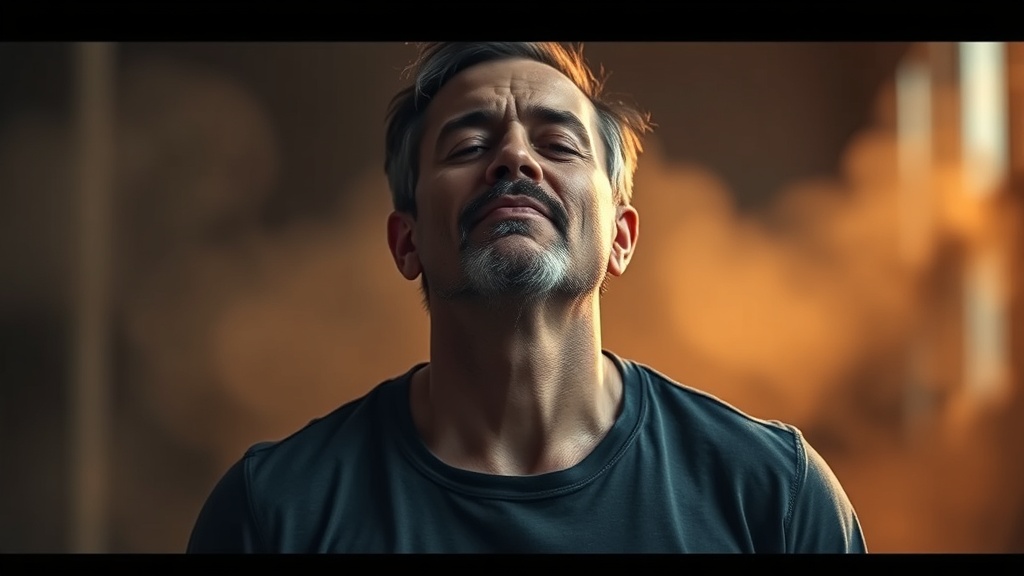
How to Release Built-Up Tension Using Somatic Awareness

Why Does Your Body Hold Stress Even When Your Mind Tries to Relax?
Your nervous system doesn't distinguish between a looming deadline and a charging predator—both trigger identical muscular bracing patterns. Research published in the National Institutes of Health found that chronic tension doesn't just live in your mind; it embeds itself in your fascia, your jaw, your shoulders, your very posture. The result? You're carrying around physical stress that no amount of positive thinking can dissolve. This post teaches you a somatic awareness technique—a body-based practice that interrupts the feedback loop between anxious thoughts and physical tension. You'll learn how to locate where stress hides in your body, how to release it systematically, and how to build this into a sustainable practice that actually fits your life.
What Is Somatic Awareness and Why Does It Work?
Somatic awareness is the practice of paying deliberate attention to physical sensations as a pathway to mental calm. Unlike cognitive approaches that try to talk you out of anxiety, somatic work goes straight to the source—your body. When you're stressed, your sympathetic nervous system floods your muscles with tension. This made sense when we needed to run from threats. But modern stressors—emails, notifications, financial pressure—don't resolve with physical action. So the tension stays trapped.
Here's where it gets interesting. Your brain and body communicate in a loop. Tense muscles signal danger to your brain; your brain responds by maintaining alertness, which keeps muscles tense. Dr. Bessel van der Kolk's work at The Trauma Research Foundation has shown that interrupting this loop through body-based awareness can reduce rumination and anxiety more effectively than thought-based interventions alone. When you consciously soften a clenched jaw or drop your shoulders, you're sending a safety signal upward. Your nervous system receives the message: the threat has passed. This isn't metaphorical—measurable changes in heart rate variability and cortisol levels follow somatic practices. The technique works because it speaks your nervous system's native language: sensation.
How Do You Practice the Body Scan Release Technique?
This practice takes ten minutes. Set a timer so you're not watching the clock. Lie down if possible—though a straight-backed chair works too. The key is physical support. Your muscles shouldn't need to work to hold you up.
Step one: Grounding. Close your eyes. Feel the surface beneath you—not as a concept, but as sensation. The weight of your body pressing down. The temperature of the air on your skin. The rhythm of your breath without changing it. Spend two minutes here. Most people rush this. Don't. Grounding is the foundation everything else builds on.
Step two: The scalp and face. Bring attention to your scalp. Notice if there's tension there—most people hold surprise in their forehead without realizing. Soften. Move to your eyes. The tiny muscles around them are often exhausted from screens. Let them rest heavily in their sockets. Your jaw deserves special attention—it's one of the strongest muscles relative to size, and one of the most chronically tense. Don't just "relax" it. Open your mouth slightly. Wiggle your jaw side to side. Let it hang loose for a moment. Feel how foreign that sensation is. That's how much tension you normally carry.
Step three: Shoulders and chest. Your shoulders have likely crept up toward your ears. Let them drop—really drop. Not the half-inch that feels polite. Let them fall away from your neck completely. Feel your chest expand without forcing deep breaths. Simply remove the tension that was restricting it. Notice the difference between "taking a deep breath" and "removing what was preventing full breathing." The latter is somatic work.
Step four: Hands and belly. Our hands hold enormous tension—we type, we grip, we fidget. Open your palms. Stretch your fingers wide, then let them curl naturally without closing into fists. Feel the blood moving back into them. Your belly is often the most guarded area. We've been taught to hold it in, to appear controlled. Let it soften. Let it rise and fall with breath without sucking it in. This takes courage—softening your belly signals vulnerability to your nervous system, which is exactly why it works.
Step five: Legs and feet. Scan down through your thighs, your calves, your feet. Notice if your toes are curled. Release them. Feel the weight of your legs sinking into the surface below. Imagine tension draining downward, out through your feet, into the ground. This isn't mystical—it's physiological. The act of consciously attending to and releasing muscle tension triggers the parasympathetic response.
Step six: Full body integration. Spend the final two minutes simply being present in your now-softened body. Don't try to achieve any particular state. The goal isn't to feel blissful—it's to feel accurately. To know what's actually happening in your physical self without the static of chronic tension drowning everything out.
How Can You Adapt This Practice for Busy Days?
Ten minutes is ideal. Life rarely offers ideal conditions. The good news: somatic awareness scales. You can practice micro-versions throughout your day without anyone noticing. Waiting for a video call to start? Do a thirty-second shoulder drop. Standing in line? Feel your feet on the ground. The Harvard Health Blog notes that even brief moments of body awareness can interrupt stress accumulation.
Try this: set three daily alarms labeled "body check." When they sound, pause whatever you're doing—just for sixty seconds. Scan your jaw, shoulders, and belly. These three areas hold the most tension for most people. Release what you find. Then return to your task. The cumulative effect of these micro-practices often exceeds a single longer session because you're repeatedly interrupting the tension cycle rather than just addressing it once.
For those who work at desks, the "posture reset" is invaluable. Every hour, roll your shoulders backward three times—not forward, which most people do instinctively. Forward rolls reinforce hunched posture. Backward rolls open the chest and signal safety to your nervous system. Pair this with a gentle chin tuck—drawing your chin back so your ears align over your shoulders. Most of us jut our chans forward, especially when focused. This strains the neck and triggers a low-grade stress response. Correcting it takes five seconds and changes your physiological state measurably.
What If You Can't Feel Anything or Feel Too Much?
Two opposite challenges appear frequently. Some people scan their bodies and feel—nothing. Numbness. Others feel everything at once, an overwhelming flood of sensation that borders on panic. Both responses are normal, and both have solutions.
If you feel numb, don't force sensation. Instead, introduce gentle movement. Wiggle your toes. Roll your shoulders. The physical act creates sensation you can then notice. Sometimes numbness is protective—your nervous system dampening input it deems too much. Respect that. Work at the edges. If your belly feels blank, can you feel your chest? If your feet feel distant, can you feel your hands? Meet yourself where you are rather than demanding full access immediately.
If sensation feels overwhelming, anchor to one specific point. The feeling of your breath at your nostrils. The weight of your body on the chair. Don't scan your whole body—stay with that single anchor until the wave of sensation settles. You're not doing this wrong. Heightened sensitivity often indicates your nervous system is actually starting to process stored tension. That's productive, but it requires pacing. Think of it as turning down the volume rather than unplugging the speakers.
Both numbness and overwhelm typically shift with consistent, gentle practice. The middle path—clear, manageable sensation—emerges as your nervous system learns it can experience the body safely. This learning takes time. Be patient with the process in ways you might not be patient with yourself elsewhere.
Somatic awareness isn't another item for your to-do list. It's a return to something your body already knows how to do. Children live in their bodies naturally—watch a toddler fully absorbed in the feeling of sand or the rhythm of running. We unlearn this. The good news: the capacity remains, dormant but intact. Every time you pause to notice your shoulders and let them drop, you're speaking a language you once knew fluently. With practice, it becomes native again.