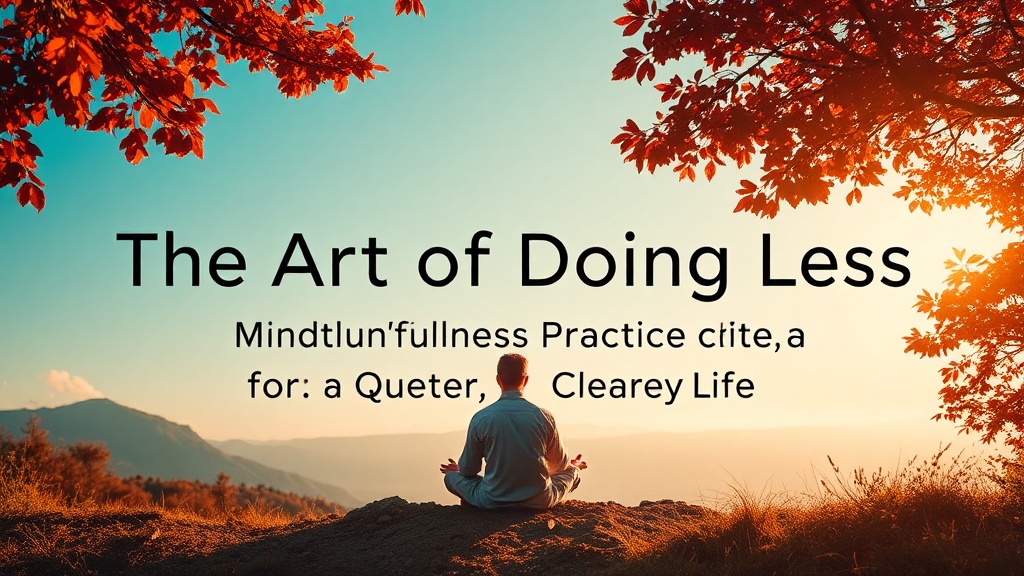
The Art of Doing Less: A Mindfulness Practice for a Quieter, Clearer Life

There’s a quiet tension most people carry but rarely name: the sense that slowing down might cost you something. Momentum. Identity. A feeling of control.
In a culture built on constant motion, stillness can feel like resistance. But in mindfulness practice, stillness is not resistance—it’s awareness.
Doing less is not about withdrawing from life. It’s about returning to it with clarity. When you remove the excess, what remains becomes easier to see—and easier to live with.
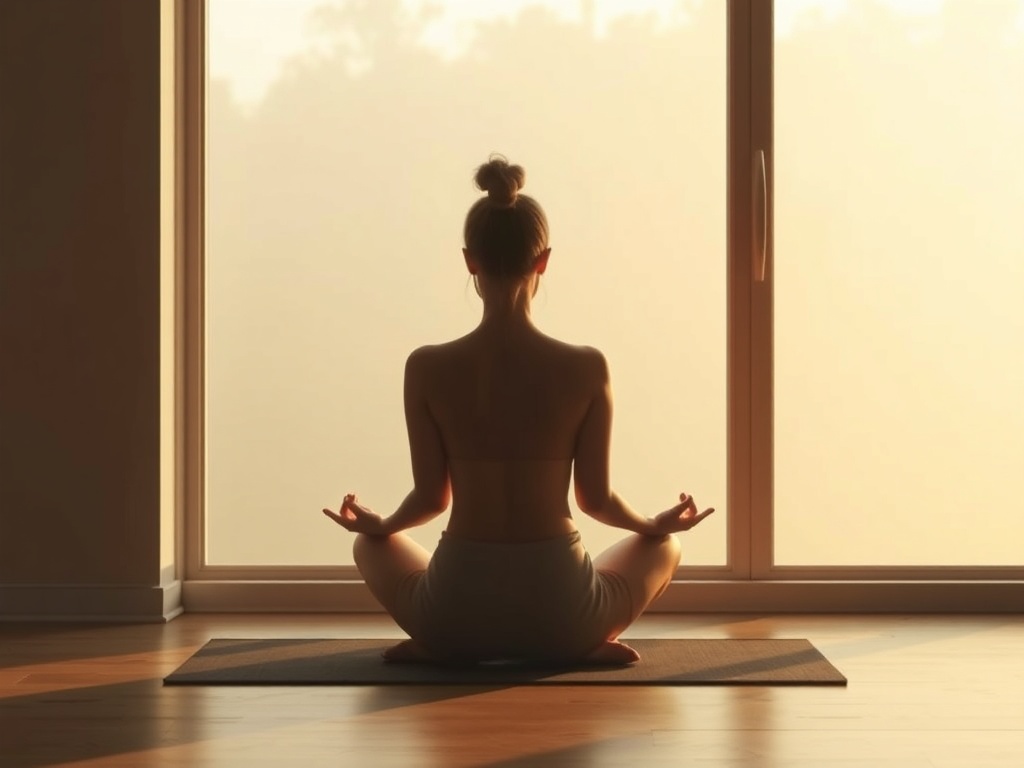
Slowing Down Is Where Awareness Begins
Most people don’t realize how fast they’re moving until they try to stop. Not physically, but mentally. Thoughts stack on top of each other. Attention jumps. The mind keeps reaching for the next thing.
This constant movement isn’t neutral—it shapes how you experience your life. When everything is rushed, nothing is fully seen.
Slowing down interrupts that pattern. It creates a gap between stimulus and response. In that gap, awareness has a chance to appear.
And awareness changes everything. It softens reactivity. It reveals habits. It shows you where you’ve been living on autopilot.

Doing Less as a Daily Practice
Mindfulness is often misunderstood as something you do only while sitting still. But the real practice happens in ordinary moments.
Doing less is one way to bring mindfulness into those moments.
It means pausing before reacting. Taking one breath before answering. Finishing one task before starting another. These are small acts, but they accumulate into a different way of being.
You begin to notice how often you rush unnecessarily. How often you fill silence out of habit. How often you act without intention.
Doing less is not about restriction. It’s about creating enough space to notice what’s actually happening.

The Role of the Breath
If you’re unsure where to begin, start with the breath. Not as a technique to control, but as an anchor.
Your breath is always present, always available, and always honest. It reflects your state without judgment.
When you slow your breathing, even slightly, your body responds. Tension softens. The nervous system settles. Your attention gathers instead of scattering.
You don’t need long sessions. A few conscious breaths, taken fully, can shift your entire moment.
This is the essence of doing less: returning to something simple and letting it be enough.

Letting Go of Unnecessary Effort
Much of what exhausts us isn’t what we do—it’s how tightly we hold it.
There’s a subtle strain in trying to control every outcome, every conversation, every detail. Mindfulness invites a different posture: participation without excessive force.
Doing less often means releasing that extra effort. Not abandoning responsibility, but softening the grip.
You still act. You still engage. But with less tension and more presence.
This shift is small on the surface, but it changes the quality of your experience entirely.

Silence Is Not Empty
Many people avoid silence because it feels uncomfortable. Without constant input, the mind has nothing to distract it.
But silence is not empty—it’s revealing.
In silence, you begin to hear your thoughts more clearly. You notice patterns. You see where your attention goes when it’s not directed.
This isn’t always pleasant at first. But over time, silence becomes less intimidating and more grounding.
It becomes a place you can return to, rather than something you avoid.

The Subtle Joy of Enough
One of the unexpected effects of doing less is a growing sense of enoughness.
When you’re not constantly adding, chasing, or filling, you start to notice what’s already here. Simple experiences become more vivid. Ordinary moments feel complete.
This is not about lowering your standards. It’s about recognizing that contentment doesn’t come from accumulation—it comes from attention.
The more present you are, the less you feel the need to reach for something else.

Building a Quieter Rhythm
Doing less is not a one-time decision. It’s a rhythm you return to daily.
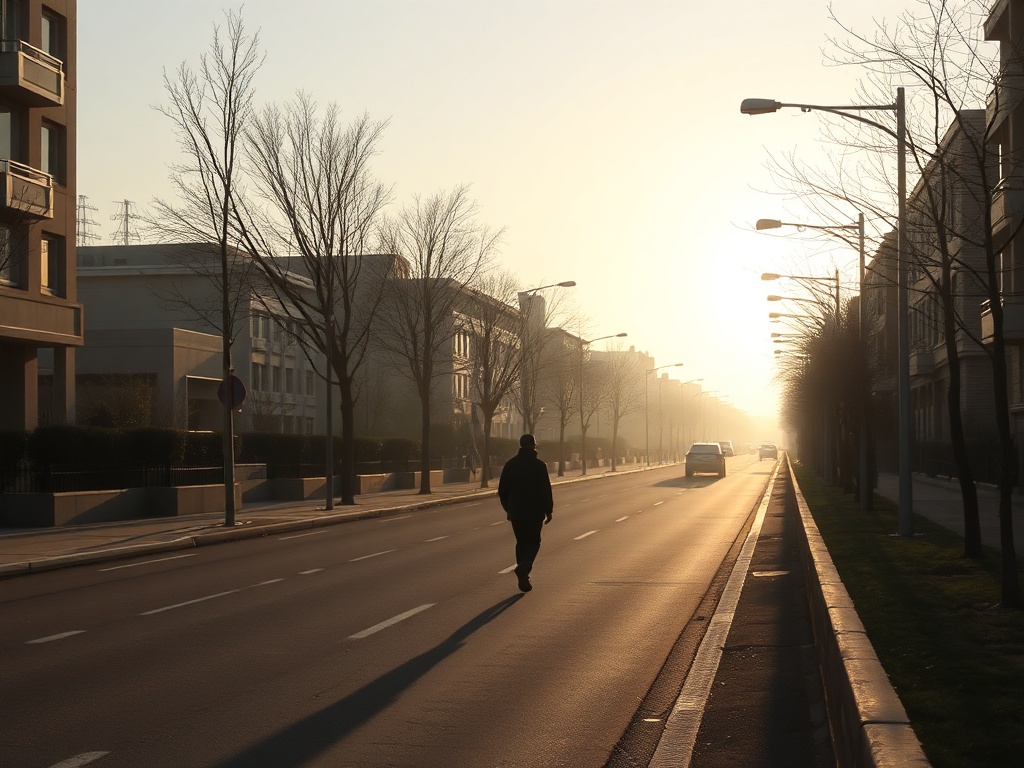
You might begin your morning without reaching for your phone. You might take a short walk without headphones. You might sit for a few minutes in the evening without filling the space.
These choices are small, but they reshape how your day feels. They introduce pauses where there used to be constant motion.
Over time, those pauses become natural. You don’t have to force them—they become part of how you live.
Where to Start
You don’t need a perfect routine to begin. You need a moment.
Right now, you can pause. Take one slow breath. Notice where you are. Notice what you feel.
That’s the practice.
From there, you can begin to simplify. Not all at once, but gradually. Remove one unnecessary layer. Create one small space. Return to your breath when things feel crowded.
Doing less is not about becoming a different person. It’s about becoming more aware of the one you already are.
And from that awareness, a quieter, clearer life begins to take shape—one moment at a time.