Why Your Sleep Environment Matters More Than Your Sleep Schedule

Why a Strict Bedtime Isn't the Fix You Think It Is
Many people approach sleep as a math problem—if I go to bed at exactly 10:00 PM, I will get eight hours of rest. They track every minute and feel a sense of failure when they miss their window. This mindset ignores a fundamental truth: sleep quality is dictated more by your physical environment than by the clock on your wall. You can lie in bed for ten hours, but if your room is too warm, too bright, or too noisy, that time is largely wasted. We need to stop focusing on the 'when' and start focusing on the 'where'.
The goal of a restorative sleep environment is to reduce sensory input so your nervous system can transition from a state of alertness to a state of rest. When your surroundings are cluttered or overly stimulating, your brain stays on high alert (a state often called hypervigilance). This makes it nearly impossible to enter deep sleep cycles. Instead of fighting your internal clock, you should be optimizing your external space to support your body's natural rhythms.
How does light affect my sleep depth?
Light is perhaps the most powerful external cue for your brain. Even through closed eyelids, your eyes can sense light, which signals the brain to suppress melatonin. This is why a single LED light from a power strip or a sliver of streetlamp light through the curtains can keep you in a lighter stage of sleep. To fix this, you shouldn't just look for a darker room; you should look for a blacked-out room.
Consider these adjustments for light management:
- Blackout Curtains: These are a non-negotiable for many. They block out the unpredictable light of early sunrises or passing cars.
- Light-Blocking Masks: If you cannot change your curtains, a high-quality silk mask can create a consistent dark environment.
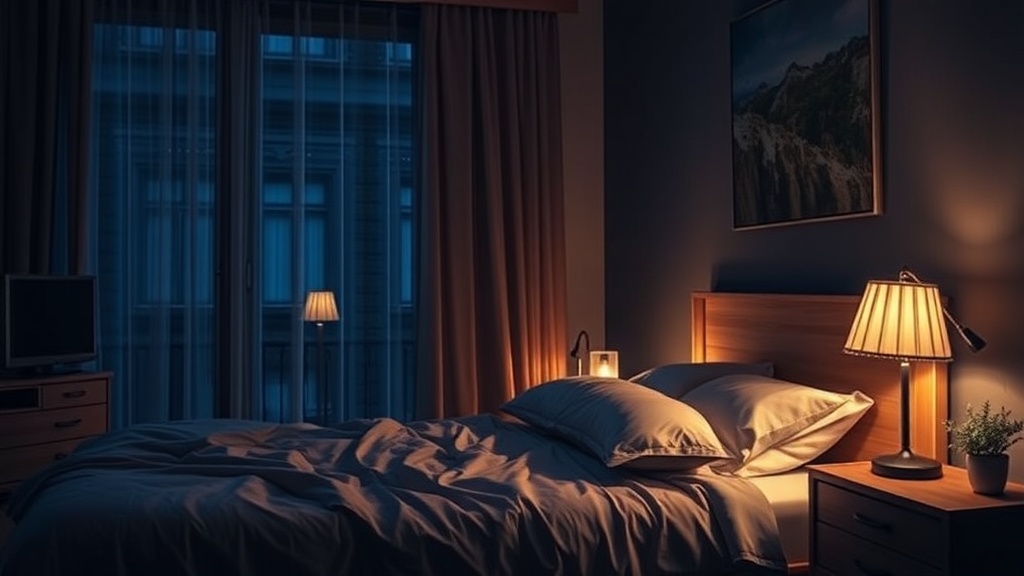
- Red Light Usage: If you must use a light in the evening, use dim, warm-toned lamps. Red wavelengths are less disruptive to your internal clock than the blue light found in most modern electronics.
According to research from the Sleep Foundation, light exposure is a primary driver of our circadian rhythms. If your room is too bright, you are essentially telling your brain it is still daytime.
Is room temperature a factor in sleep quality?
Your core body temperature needs to drop slightly to initiate and maintain deep sleep. If your room is too hot, your body struggles to shed heat, which often leads to fragmented sleep or waking up in the middle of the night. This isn't just about feeling uncomfortable; it is a physiological requirement for certain stages of sleep.
An ideal sleep environment involves a temperature drop. While personal preferences vary, a cooler room helps facilitate the natural dip in body temperature required for rest. You might find that a fan or even a slightly open window makes a difference. If you are a 'hot sleeper,' your mattress material (like memory foam) might actually be trapping heat against your body, preventing that necessary cooling process. You might look into breathable linen sheets or cotton instead of synthetic blends to help manage this.
Can sound levels impact my nervous system during rest?
Sound is often an overlooked variable. It isn't just about loud, sudden noises that wake you up; it is about the constant 'noise floor' of your environment. For many, the silence of a room can actually be jarring, making them hyper-aware of every small creak or distant car engine. This is where controlled sound becomes useful.
There are two ways to approach this:
- Sound Masking: Using white, pink, or brown noise. These sounds create a consistent blanket of audio that prevents sudden changes in the environment from startling your brain.
- Sound Dampening: Using soft materials (rugs, heavy curtains, even bookshelves) to absorb sound waves before they reach your ears.
The goal is to create a predictable auditory space. When your brain knows what to expect from the soundscape, it is less likely to react to small changes in the environment. This is a key component of a calm, restorative space.
How to build a sensory-neutral bedroom
A truly restorative bedroom should be a place of sensory neutrality. This means minimizing anything that could trigger a response from your senses. This goes beyond just light and sound—it includes texture and even scent. A cluttered room can cause mental clutter. If you look around your room and see piles of laundry or unfinished work, your brain will struggle to fully disengage. While you don't need a perfect room, a clear space can lead to a clear mind.
The following table illustrates how different sensory inputs can affect your transition to sleep:
| Sense | Disruptive Input | Restorative Input |
|---|---|---|
| Sight | Blue light, bright LEDs | Dim warmth, blackout darkness |
| Sound | Sudden noises, high-frequency | Constant low-frequency (white noise) |
| Touch | Rough fabrics, heat retention | Breathable textures, cool temperatures |
| Smell | Strong artificial scents | Natural, subtle scents (lavender) |
By intentionally selecting your bedsheets, your lighting, and your noise level, you are building a foundation for sleep that doesn't rely on willpower. You aren't just trying to sleep; you are creating the conditions that make sleep inevitable. This shift from a 'doing' mindset to an 'environment' mindset is a fundamental part of a mindful life.