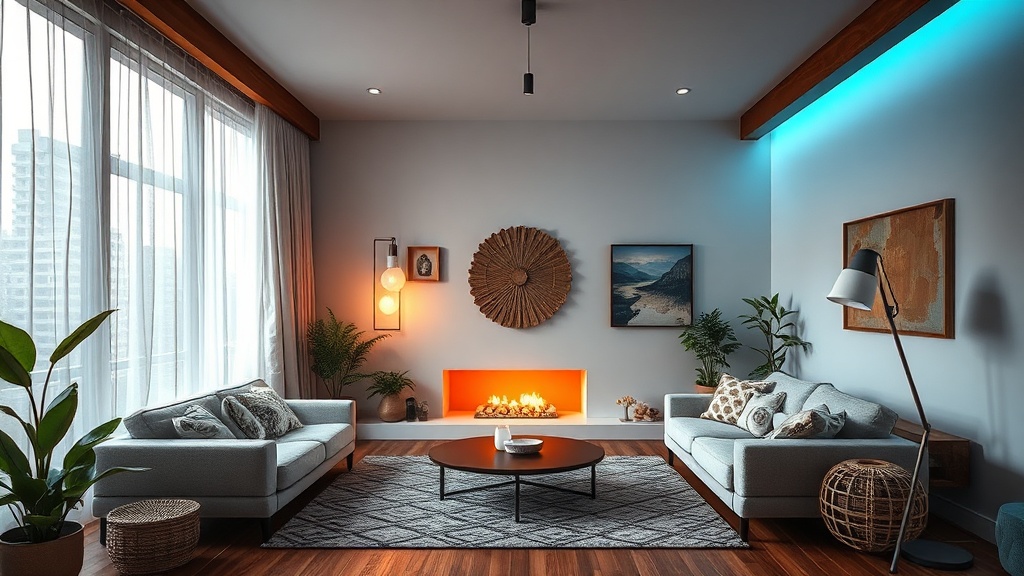
Creating a Sensory Sanctuary in Your Living Space

Recent studies suggest that the average person experiences nearly 60,000 thoughts per day, many of which are triggered by the immediate environment. This post examines how to manipulate sight, sound, scent, touch, and taste to create a living space that supports nervous system regulation. We'll look at specific tools—from weighted blankets to specific lighting temperatures—to help you build a home that functions as a tool for mental clarity rather than a source of sensory overload.
How Can I Reduce Sensory Overload at Home?
Reducing sensory overload involves stripping away unnecessary stimuli and replacing high-frequency distractions with predictable, low-impact sensory inputs. Most modern homes are inadvertently designed to keep us in a state of high alertness. Think about the blue light from your smart fridge or the constant hum of a heavy HVAC system. These aren't just background noises; they're physiological stressors.
To start, look at your lighting. Standard overhead LED bulbs often emit a high concentration of blue light, which can suppress melatonin production and keep your brain in a "high-alert" state. Instead, try switching to warm-toned bulbs or using smart lighting systems like Philips Hue to mimic the natural progression of sunlight. This helps your body understand when it's time to wind down.
The goal isn't to live in a dark room. It's about intentionality. If you're working from home, you might need a bright, cool-toned light to stay focused. But when the workday ends, that light needs to go. This transition is a way to turn everyday transitions into mindful reset points.
Here is a quick way to audit your current space:
- Visual: Are there too many small, cluttered items on surfaces?
- Auditory: Is there a constant low-frequency hum from an appliance?
- Olfactory: Does your home smell like cleaning chemicals or stale air?
- Tactile: Are your surfaces hard, cold, or uncomfortable?
What Are the Best Scents for Relaxation?
Scents that promote relaxation typically fall into the categories of woodsy, herbal, or light floral notes, as these are most closely linked to parasympathetic activation. While everyone's nose is different, certain botanical profiles have been studied for their ability to lower cortisol levels.
Lavender is the obvious choice, but it's often overused and can feel a bit cliché. If you want something deeper, look toward cedarwood or sandalwood. These earthy scents ground the senses. If you prefer something fresh, a hint of bergamot can be incredibly effective. I personally find that a high-quality essential oil diffuser—like those from Vitruvi—provides a much more subtle, sophisticated scent profile than a cheap synthetic candle.
A quick word of caution: avoid synthetic "fragrance" oils. These often contain phthalates which can be irritating to the respiratory system. If you want a truly peaceful environment, stick to pure essential oils or beeswax-based candles. It's a small detail, but it matters for your long-term wellness.
The following table compares different sensory tools based on their primary function in a sanctuary:
| Sensory Input | Tool Example | Primary Benefit |
|---|---|---|
| Auditory | White Noise Machine (e.g., Marpac Dohm) | Masks disruptive external sounds |
| Tactile | Weighted Blanket (e.g., Bearaby) | Promotes deep pressure stimulation |
| Visual | Salt Lamps or Dimmable LEDs | Reduces blue light exposure |
| Olfactory | Essential Oil Diffuser | Regulates mood via scent |
How Do I Use Texture to Calm My Nervous System?
Texture acts as a physical anchor for your attention, moving your focus from your racing thoughts down into your body. This is a foundational part of using somatic awareness to release tension. When your environment feels "sharp" or "hard," your body stays in a defensive posture.
To create a sense of safety, introduce soft, heavy, and organic textures. A heavy, knitted weighted blanket provides more than just warmth; it provides proprioceptive input that tells your brain you are safe and grounded. I've found that even changing the texture of your couch cushions from stiff linen to a soft velvet can change the entire "vibe" of a room during a late-night reading session.
Don't overlook the floor. If you have hardwood or tile, adding a high-pile rug or even a small sheepskin rug can make a massive difference in how you feel when you move through your home. Hard surfaces signal "utility" and "movement," while soft surfaces signal "rest" and "stillness."
The Tactile Hierarchy:
- Low Impact: Smooth cotton sheets and light linen curtains.
- Medium Impact: Wool rugs and wooden furniture.
- High Impact: Weighted blankets, velvet upholstery, and plush textures.
Does Sound Play a Role in Mindful Living?
Sound is perhaps the most intrusive sense because you can't simply "close your eyes" to block it out. Constant, unpredictable noises—like a neighbor's car or a distant siren—keep the brain in a state of hyper-vigilance. To combat this, you need to create a consistent "soundscape."
Pink noise or brown noise is often more effective for deep relaxation than standard white noise. While white noise is a high-frequency hiss, brown noise is much deeper and more resonant, similar to the sound of a distant ocean or a low rumble. This can be much more soothing for a nervous system that is already feeling frayed. You can find high-quality recordings on platforms like Spotify or dedicated devices like the LectroFan.
If you're someone who struggles with silence, that's okay. Total silence can actually be jarring for some people. The goal isn't to eliminate all sound, but to eliminate distracting sound. A steady, predictable loop of natural sounds—like rainfall or forest ambience—provides a "buffer" between you and the chaotic world outside. This is a vital part of why your nervous system needs a reset during the day.
It's worth noting that even the hum of your refrigerator can be a distraction. If you're feeling particularly overstimulated, try using noise-canceling headphones (the Sony WH-1000XM5 is a gold standard here) for twenty minutes of intentional quiet. It's a temporary fix, but it works.
Creating a sanctuary isn't about buying expensive things. It's about understanding how your environment talks to your brain. Every time you choose a warmer light, a softer blanket, or a more natural scent, you're sending a signal to your body that it's safe to relax. It's a practice of constant, small adjustments.
Steps
- 1
Audit Your Sensory Input
- 2
Introduce Soften Textures
- 3
Curate Gentle Scents
- 4
Layer Ambient Lighting
- 5
Minimize Visual Clutter